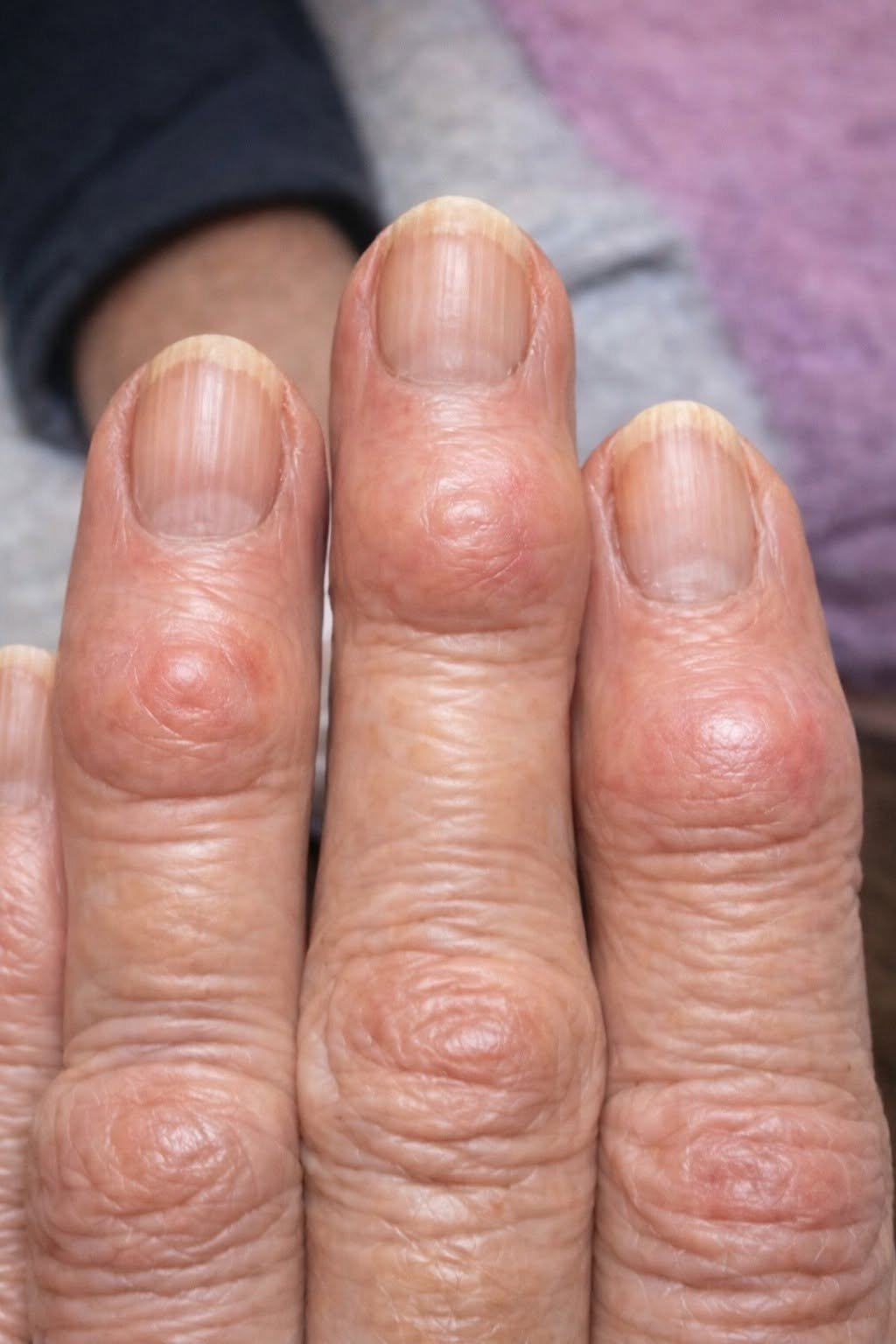
Primary Risk Factors for Hand Osteoarthritis
While anyone can develop wear-and-tear in their finger joints, several key factors significantly accelerate this degenerative process:
-
Natural Aging: Cartilage gradually loses its elasticity and moisture content over decades of use, making Heberden’s nodes highly prevalent in individuals over the age of 50.
-
Genetic Legacy: Joint structure and cartilage durability are highly heritable. If your parents or grandparents had visibly knobby fingers, you carry a significantly higher genetic risk of developing them.
-
Repetitive Mechanical Use: Jobs, hobbies, or sports that require intense, repetitive pinching, gripping, or fine-motor finger movements place heightened mechanical stress on the delicate DIP joints.
-
Hormonal Shifts: Women develop hand osteoarthritis and Heberden’s nodes at a substantially higher rate than men, with a sharp increase in cases occurring post-menopause due to declining estrogen levels.
Step-by-Step Daily Therapy Routine for Hand Flexibility
If you are currently managing active joint pain or morning stiffness while these nodes are forming, try this soothing, non-invasive daily hand-care sequence:
Hand Joint Bumps: Differential Diagnosis Matrix
| Condition / Growth Type | Distinct Physical Profile | Root Physiological Trigger | Typical Standard Management |
| Heberden’s Nodes | Hard, bony, painless/tender bumps at the fingertip joints | Osteoarthritis (cartilage wear) | Thermal therapy, joint protection, gentle exercise |
| Bouchard’s Nodes | Bony, hard swellings located at the middle finger joints | Osteoarthritis or Rheumatoid Arthritis | Hand therapy splints, systemic medical management |
| Digital Mucous Cyst | Translucent, firm, fluid-filled pocket near the nail | Joint fluid leaking from a degraded DIP joint | Clinical evaluation; must never be popped at home |
| Gouty Tophi | Irregular, hard, chalky yellowish-white deposits | Long-term accumulation of uric acid crystals | Systemic dietary adjustments, uric-acid-lowering drugs |
For Complete Cooking STEPS Please Head On Over To Next Page Or Open button (>)