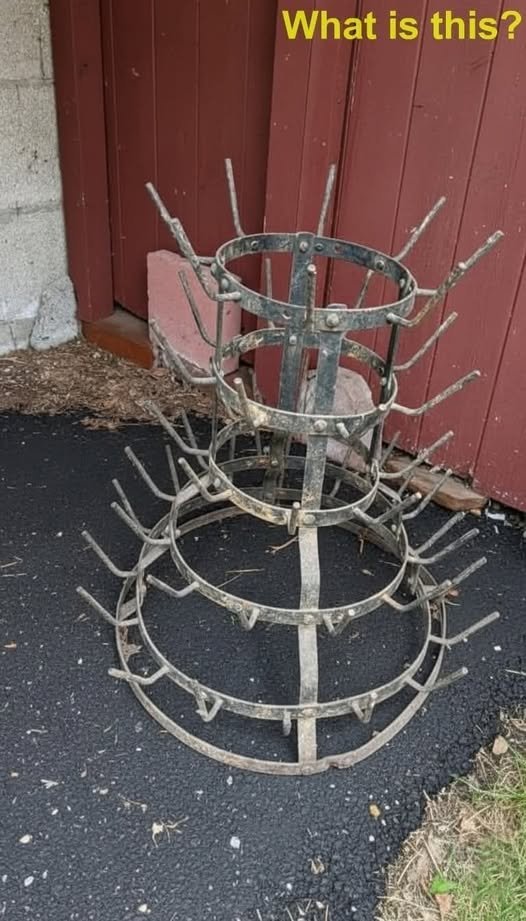
Step into a rustic kitchen from the early 1900s, and your senses are instantly greeted by the comforting smells of freshly baked bread, simmering stews, and clean linen drying nearby. In these historic households, every single object served a highly practical purpose, and nothing was ever thrown away. Among these ingenious tools, few capture the heart of early 20th-century domestic life quite like the vintage bottle drying rack.
Affectionately known in France as a hérisson (which translates literally to “hedgehog”) or simply a “bottle tree,” this spiky iron structure was once a common sight in European and American homes alike. Long before plastic containers dominated our grocery shelves, families relied on heavy glass bottles to store fresh milk, homemade beer, and preserved juices. Keeping those precious glass vessels sanitized, dry, and ready for reuse was a daily necessity, and the sturdy iron hérisson was the ultimate tool for the job.
The Design Science: Gravity Drainage, Airflow Mechanics, and Corrosion Resistance
The Physics of Natural Evaporation
The brilliant, simple engineering of the hérisson relies entirely on basic physical laws to achieve rapid, hygienic drying:
-
Gravity-Assisted Drainage: Angling the metal spikes upward allows wet glass bottles to be hung upside down. This position ensures that every drop of residual water instantly drains out of the bottle’s neck, rather than pooling at the bottom and breeding bacteria.
-
Continuous Air Convection: Elevating the bottles off flat surfaces allows ambient air to circulate freely up inside the hollow glass chambers. This natural airflow speeds up evaporation, preventing musty odors and stale moisture from getting trapped inside the container.
Material Engineering of Antique Ironwork
To survive the constant moisture of a busy washing basin, these racks required thoughtful metallurgy:
-
Hot-Dip Galvanized Coating: Many early 20th-century bottle trees were crafted from heavy iron that was dipped in molten zinc. This zinc coating acted as a sacrificial barrier, protecting the underlying iron from reacting with water and oxygen to form rust.
-
Sturdy Low-Center-of-Gravity Construction: Because wet glass bottles are incredibly heavy, the hérisson was engineered with a wide, flared circular base or heavy tripod feet. This low center of gravity prevented the rack from tipping over when loaded unevenly.
The Antique Collector’s “Hérisson” Identification Checklist
For Verifying Authentic Antiques:
-
Hand-forged iron construction (look for slightly irregular welds or hammered joints)
-
Zinc-galvanized patina (authentic old pieces will have a dull gray, textured, or weathered finish rather than a shiny chrome appearance)
-
Graduated, upward-sloping metal tines (designed to safely cradle bottle necks)
-
Heavy circular or tripod base (providing structural stability for heavy glass)
For Modern Creative Styling:
-
Washed, dried ceramic coffee mugs (for a charming, farmhouse-style mug display)
-
Vintage colored glass bottles (such as amber, green, or blue bottles to capture natural light)
-
Dried herb bundles or flower bouquets (hung upside down to dry in a rustic setting)
For Complete Cooking STEPS Please Head On Over To Next Page Or Open button (>)