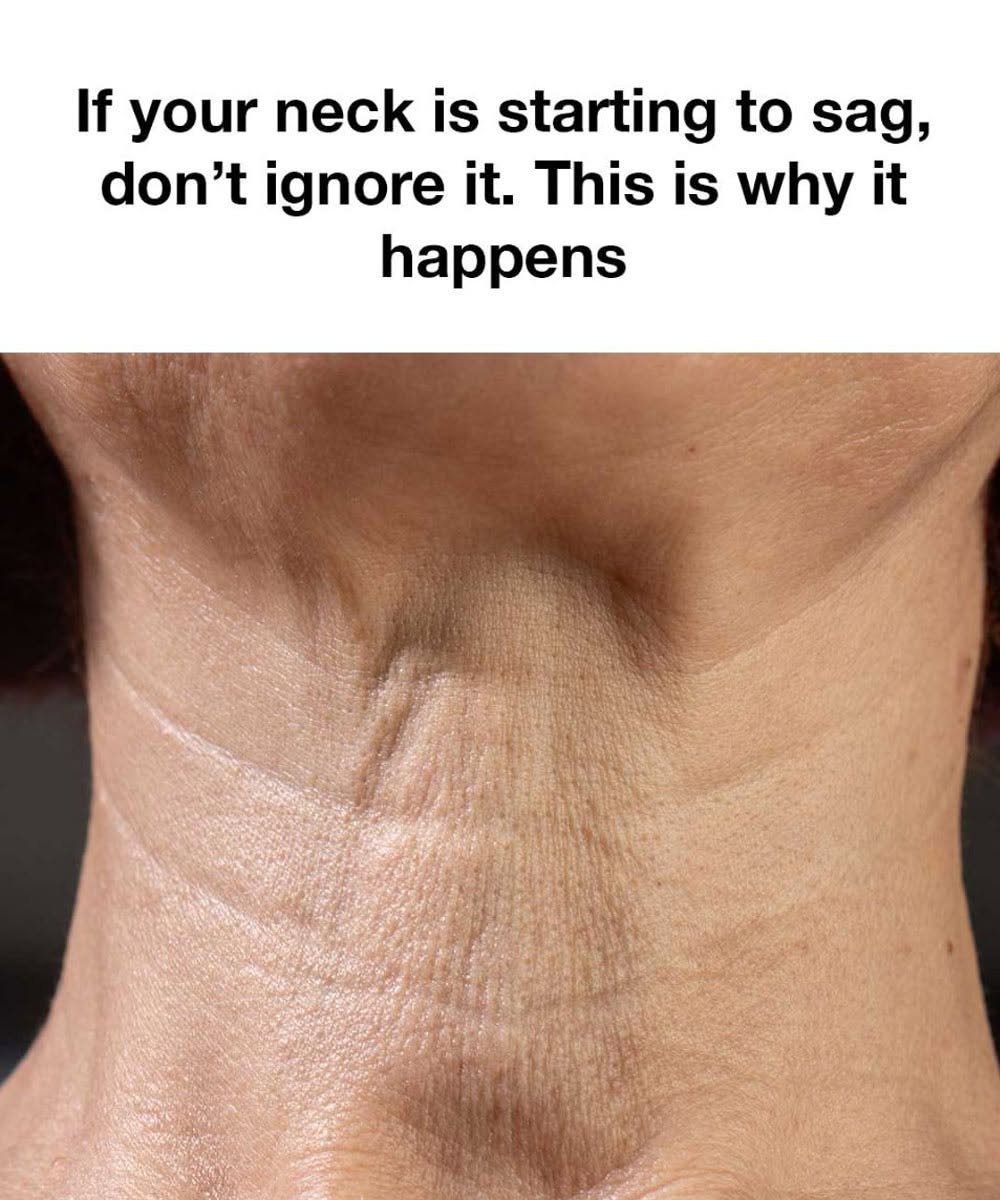
As the body naturally matures, we often invest significant time, effort, and resources into keeping our facial skin looking radiant, hydrated, and youthful. However, one of the most prominent and frequently overlooked areas to show early signs of aging is the neck. Often colloquially referred to as “turkey neck,” sagging skin below the jawline can develop gradually, catching many off guard.
Because the skin on your neck is structurally different and much thinner than the skin on your face, it is highly susceptible to gravitational pull, environmental damage, and loss of structural proteins. Fortunately, understanding the physiological mechanisms behind neck sagging allows you to make informed, highly effective adjustments to your daily skincare, posture, and wellness routines to preserve a firm, sculpted neck profile.
The Biological Science: The Platysma Muscle & Structural Collagen Loss
The Vulnerable Anatomy of the Neck
To understand why the neck is so prone to sagging, we must look at its underlying anatomy. The neck’s structural framework is heavily dictated by a broad, thin sheet of muscle called the platysma, which extends from the collarbone up to the jawline.
Unlike other skeletal muscles that attach directly to bone, the platysma is integrated directly into the superficial skin layers. As this muscle naturally weakens and stretches with age, it can separate into distinct vertical bands, pulling the overlying skin downward.
The Breakdown of the Dermal Scaffold
Supporting this muscular framework is the dermis, which relies on two primary structural proteins:
-
Collagen Depletion: Collagen acts as the structural scaffolding of your skin. After the age of 40, your body’s natural collagen production declines by approximately 1% each year, leaving the skin less capable of resisting gravity.
-
Elastin Degradation: Elastin fibers provide the “snap-back” quality of youthful skin. Chronic exposure to ultraviolet (UV) radiation damages these delicate fibers, leading to premature sagging, deep horizontal creases, and crepiness.
For Complete Cooking STEPS Please Head On Over To Next Page Or Open button (>)