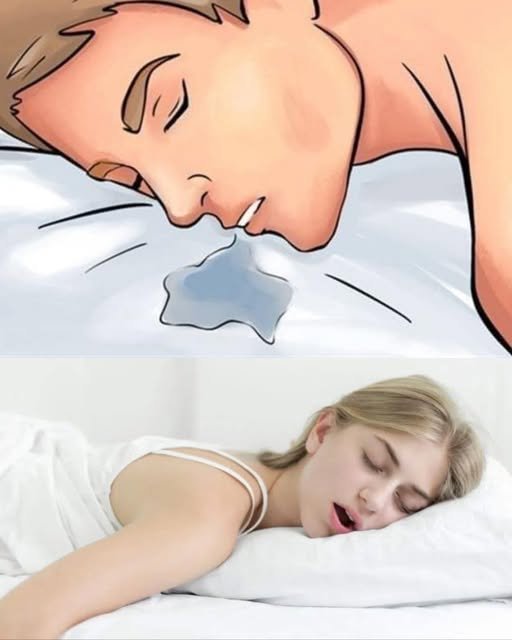
Waking up to find a damp patch on your pillowcase can be a surprising and slightly embarrassing morning discovery. However, nighttime drooling—clinically referred to as sialorrhea during sleep—is an incredibly common physiological occurrence that affects millions of healthy adults worldwide. In most cases, it is entirely harmless and doesn’t point to any underlying medical issues.
Our bodies naturally produce saliva continuously to protect our teeth, keep our tissues moist, and assist with digestion. When we enter deep states of rest, our body’s swallowing reflexes slow down dramatically while our facial muscles fully relax. If your mouth drifts open during the night, gravity simply takes over. While typically benign, sudden or excessive increases in nighttime saliva can sometimes point to underlying issues like nasal congestion, acid reflux, or minor sleep disorders that warrant a closer look.
The Biological Science: Muscle Atonia & Nasal Airflow Mechanics
The Transition Into Deep REM Sleep
To understand why saliva escapes during sleep, we must examine what happens during Rapid Eye Movement (REM) sleep. During this deep stage of rest, your brain triggers a temporary state of muscle relaxation known as atonia. This natural paralysis relaxes the muscles of your jaw, cheeks, and throat.
Without active muscle tone keeping your jaw closed, your mouth naturally falls open, especially when you are resting on your stomach or side.
The Nasal Obstruction Domino Effect
For your respiratory system to function efficiently, you must be able to breathe freely through your nose. If your nasal passages are physically blocked, your body automatically defaults to mouth breathing:
-
-
The Obstructive Block: Anatomical variations, such as a deviated septum, or temporary swelling from allergies can block vital nasal airways.
-
The Dry Mouth Paradox: When you breathe through your mouth, dry air rapidly evaporates your saliva. In response, your salivary glands kick into overdrive to rehydrate your oral tissues, leading to excess saliva that easily pools and spills over your lips.
-
For Complete Cooking STEPS Please Head On Over To Next Page Or Open button (>)